


What Is a Sandwich Panel? Structure, Types and Industrial Applications
What Is a Sandwich Panel? Structure, Types and Industrial Applications
"Sandwich panels are among the most widely used building elements in the roof and façade systems of modern industrial buildings. Their ability to provide both mechanical strength and thermal and acoustic insulation within a single product makes sandwich panels a preferred solution for fast construction, energy efficiency and long-term performance."
What Is a Sandwich Panel?
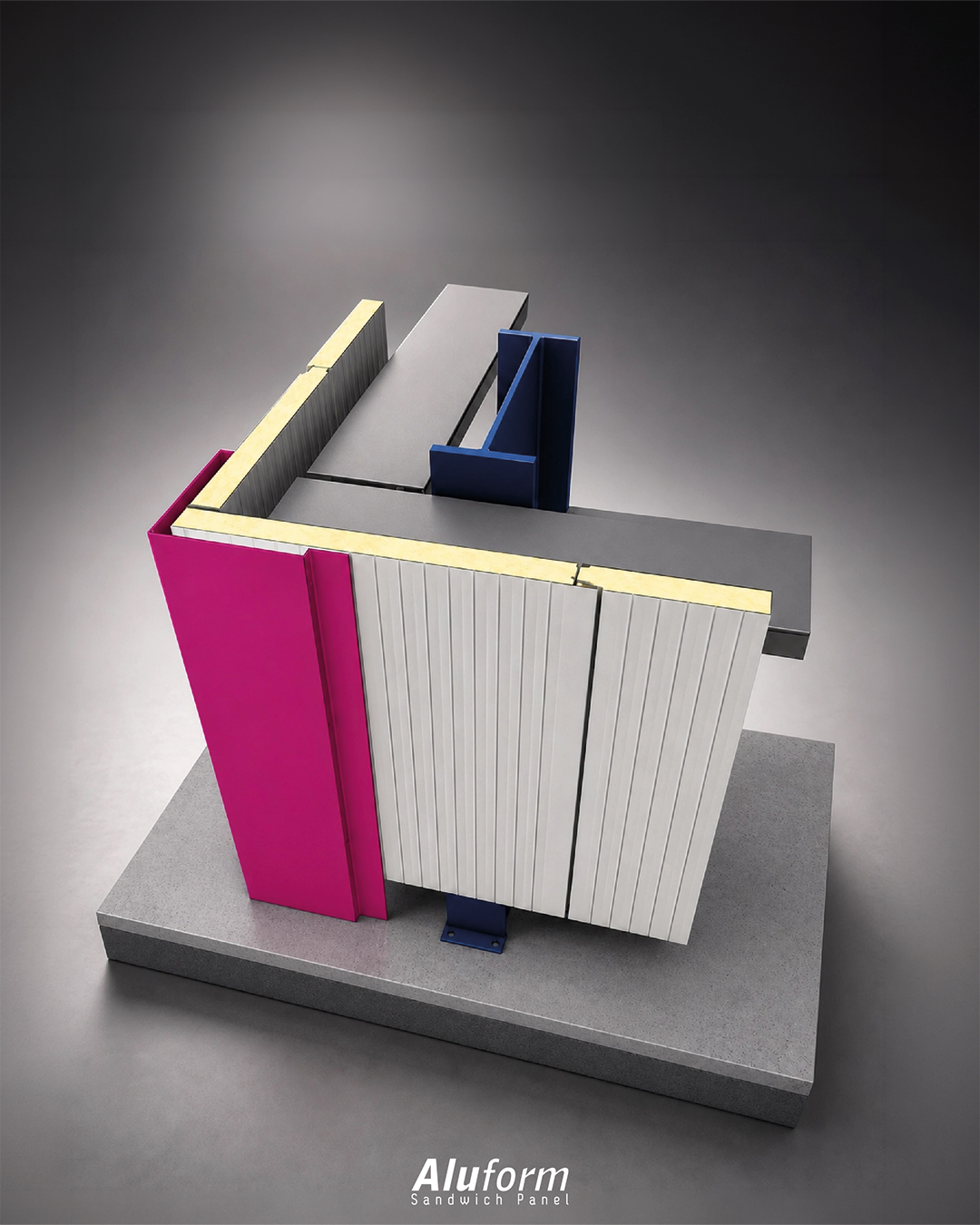
A sandwich panel is a composite building element consisting of an insulation core placed between two metal facing sheets. It takes its name from its layered structure: just as a sandwich has a filling between two slices of bread, a sandwich panel contains a foam or mineral wool core between two steel or aluminium surfaces.
Thanks to this layered structure:
- The outer surface provides mechanical strength and water resistance.
- The core layer provides thermal and acoustic insulation.
- The inner surface contributes to appearance, hygiene or additional protection.
Structural Components of Sandwich Panels
Outer and Inner Facing Sheets
The facing sheets are manufactured from pre-painted galvanized steel, stainless steel or aluminium sheet. Coated surfaces provide corrosion resistance, an aesthetically pleasing appearance and long service life.
In Aluform panels, the surfaces are protected with multi-layer coating systems, while special coating thicknesses and surface protection systems can also be supplied according to specific project requirements.
Insulation Core Material
The type of insulation core determines the technical performance and intended application of the panel. The main options include:
PIR (Polyisocyanurate) Core:
PIR provides better fire performance than PUR. PIR-insulated panels, which can be manufactured in B2 and improved fire classifications depending on the system requirements, are preferred in applications where fire safety is particularly important, including industrial facilities, hospitals and educational buildings.
Rock Wool (Mineral Wool) Core:
This mineral-based insulation material is non-combustible and can achieve an A1 fire classification depending on the product configuration. It is commonly preferred in industrial facilities where high-temperature resistance and prevention of fire spread are critical. Rock wool also provides high acoustic insulation performance.
Surface Profile Types
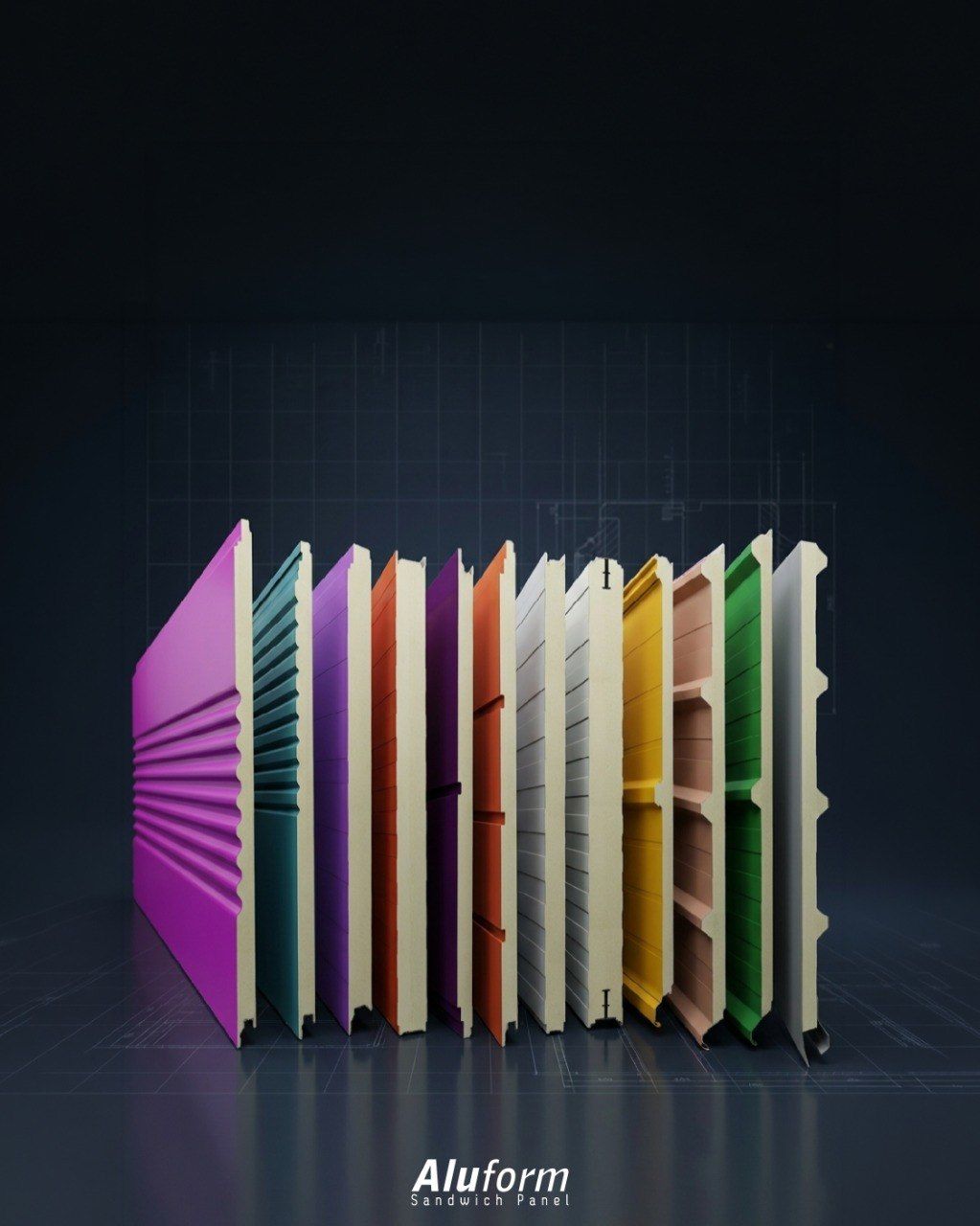
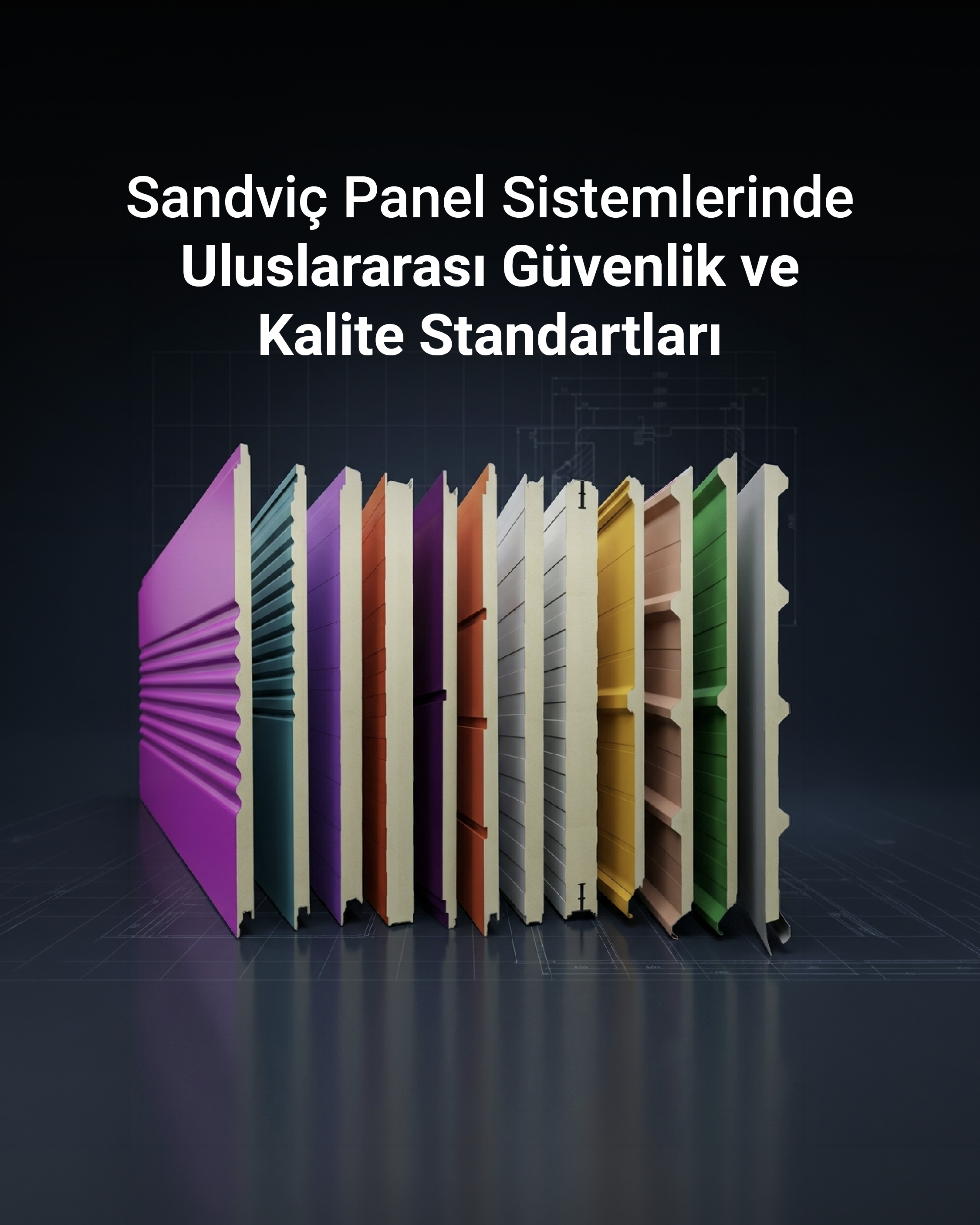
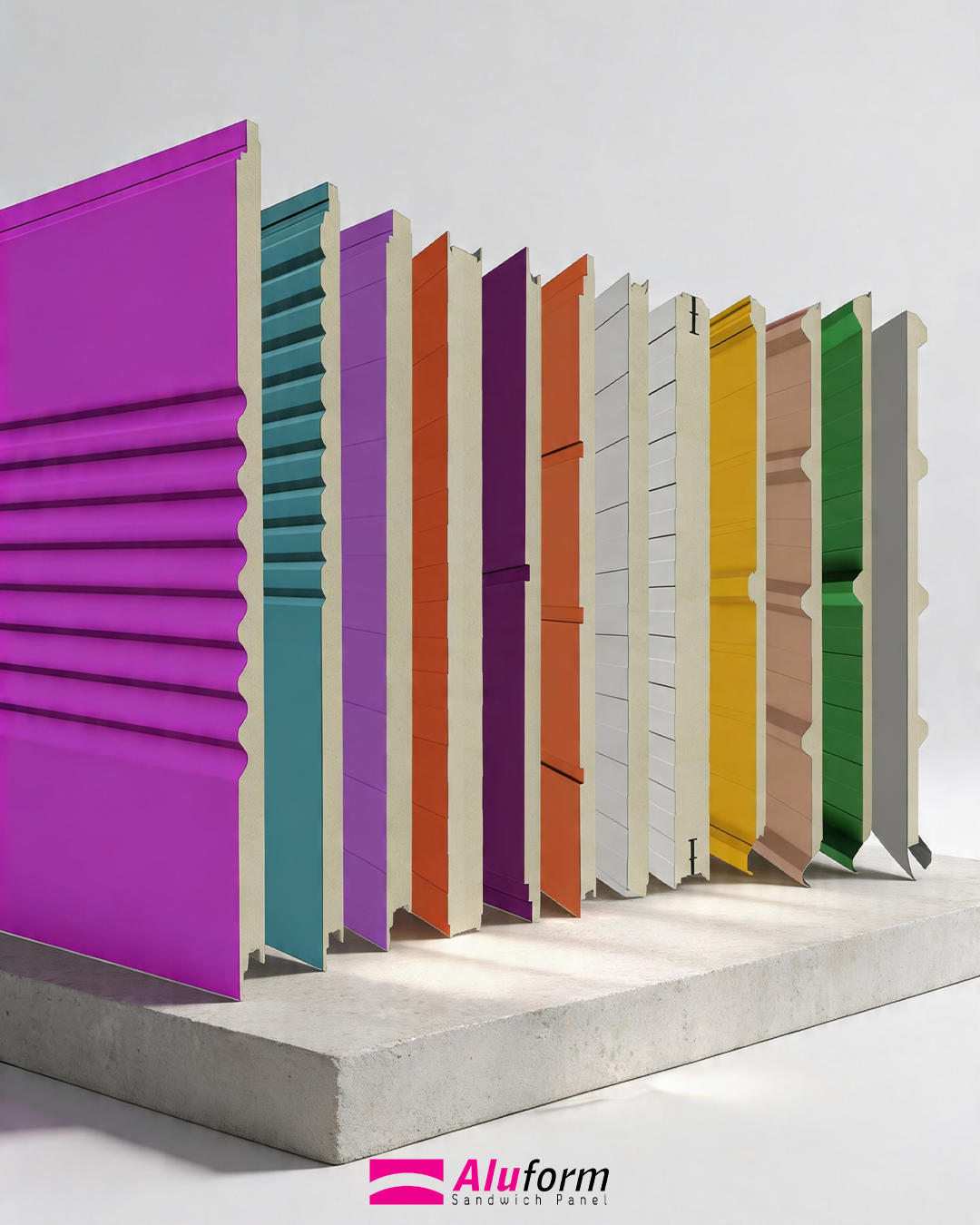
Sandwich panels are also available in different profile geometries. The number and depth of ribs influence the load-bearing performance of the panel.
The Aluform product range includes 3-rib and 5-rib roof panels, as well as flat, micro-profiled and standard ribbed façade panel options.
Types of Sandwich Panels and Their Applications
Roof Sandwich Panels
Roof panels form the primary protective envelope of a building against rain, snow loads, wind pressure and solar radiation. These panels generally have a coverage width of 1,000 mm and can be installed directly onto steel supporting structures.
Applications: Factories, warehouses, logistics centres, cold storage facilities, sports halls, shopping centres and agricultural buildings.
Façade Sandwich Panels
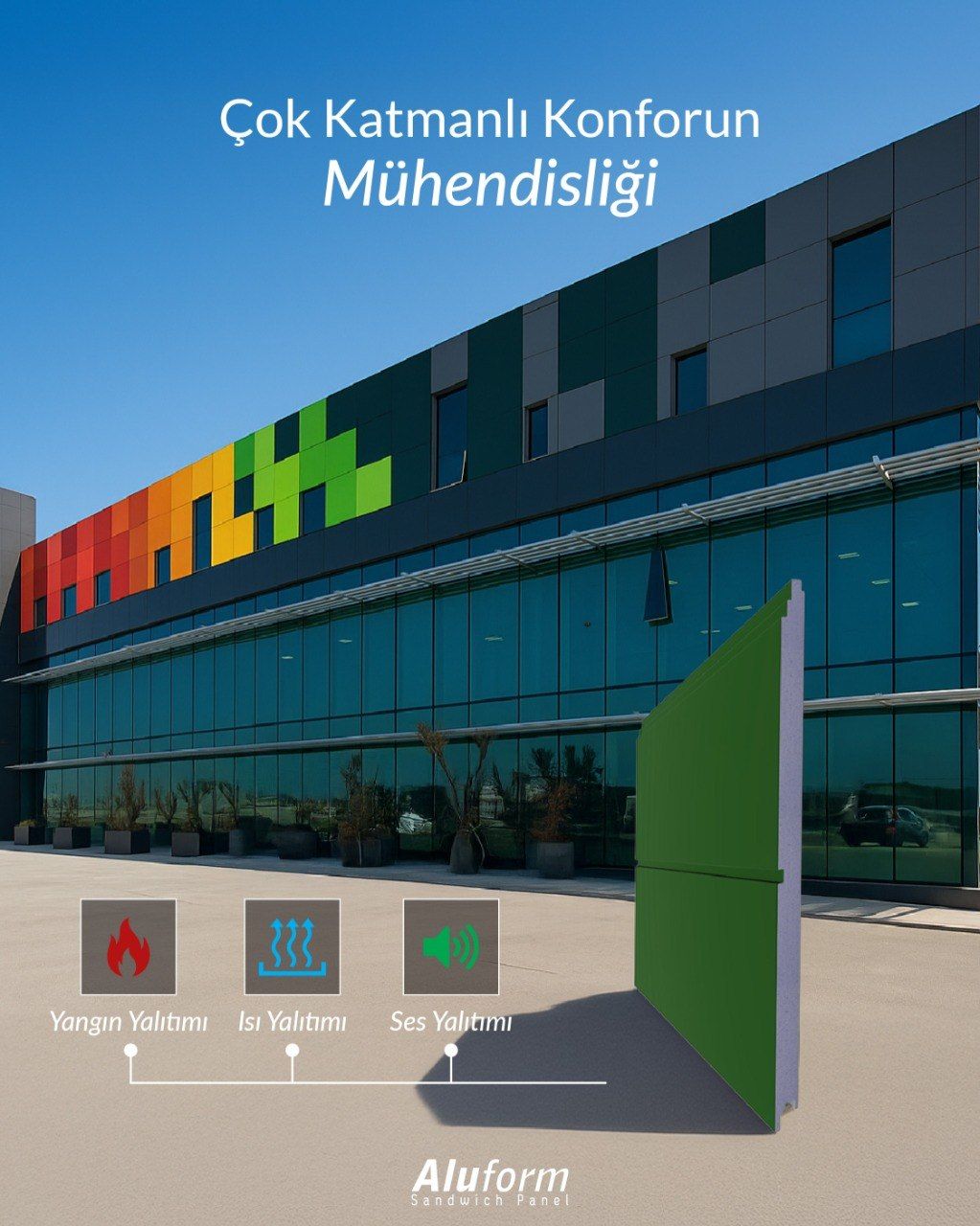
Designed specifically for wall applications, façade sandwich panels combine thermal insulation, aesthetic appearance and structural durability.
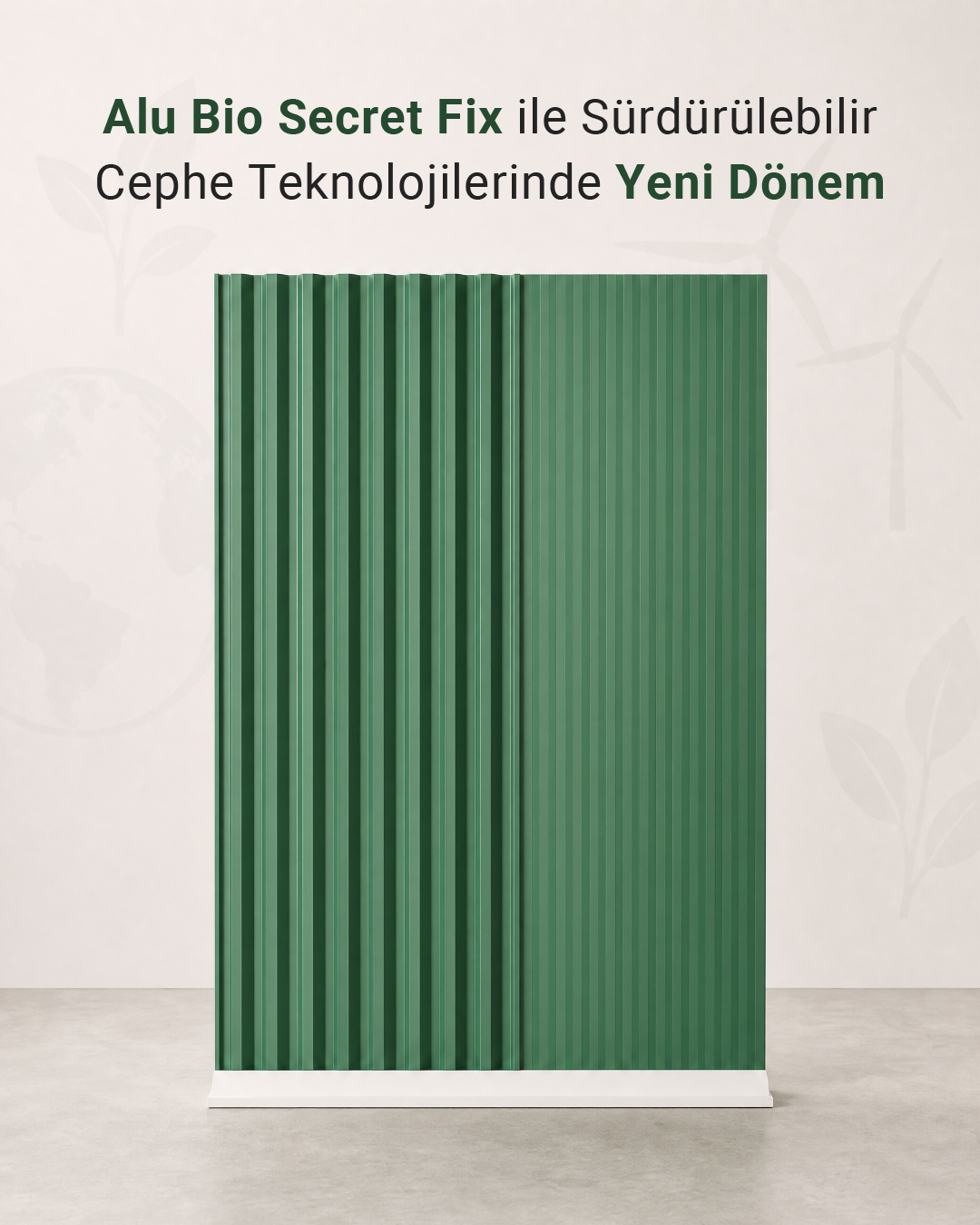
Concealed-fastener systems provide a clean and seamless appearance, while exposed-fastener systems offer advantages in terms of installation speed.
Applications: Exterior façades of industrial buildings, commercial buildings, office buildings and sports facilities.
Cold Storage Panels
Cold storage panels are designed to meet the specific requirements of food, pharmaceutical and chemical storage facilities. They stand out with their high thermal insulation performance, hygienic surface properties and specialised locking systems.
Aluform's Eurocold series offers panel thickness options ranging from 60 mm to 200 mm within this category.
Technical Advantages of Sandwich Panels
Fast Installation
Thanks to their modular structure and low weight, sandwich panels can be installed over large areas in a relatively short period of time. This directly reduces construction time and enables facilities to become operational sooner.
Energy Efficiency
Low thermal transmittance values help reduce the heating and cooling requirements of buildings. Over the long term, this contributes to measurable savings in operating and energy costs.
Structural Integrity
Steel facing sheets provide high resistance to compression and tensile forces. Foam or mineral wool insulation cores support these surfaces and create an integrated composite structure.
Long Service Life
When correctly installed and periodically maintained, sandwich panels can provide a performance life of approximately 25 to 50 years, protecting the building envelope for decades.
Aesthetic Flexibility
A wide range of RAL colours and different surface profiles provide architects and designers with considerable flexibility in meeting project-specific aesthetic requirements.
Sandwich Panel Standards: EN 14509
In Türkiye and throughout Europe, the quality and performance requirements for sandwich panels are defined by the EN 14509 standard.
This standard covers performance criteria and testing requirements relating to areas such as:
- Thermal performance
- Fire performance
- Mechanical strength
- Surface and coating quality
With our TSE-certified production approach, we verify the compliance of our panels with the specified criteria throughout the production process and provide our customers with documented quality assurance.
Frequently Asked Questions
What materials are sandwich panels made of?
Sandwich panels consist of two metal facing sheets, generally made of galvanized steel or aluminium, with an insulation core such as PUR, PIR or rock wool positioned between them.
What is the difference between a sandwich panel and a trapezoidal sheet?
A trapezoidal sheet consists of a single layer of profiled metal and does not contain an integrated insulation layer. A sandwich panel, on the other hand, is a multi-layer composite building element that incorporates thermal insulation within its structure.
Which core material provides the best thermal insulation?
PUR and PIR insulation cores offer very high thermal insulation performance, with thermal conductivity values of approximately λ ≈ 0.023 W/mK.
Rock wool provides superior fire performance, although its thermal conductivity is slightly higher, typically around λ ≈ 0.033–0.043 W/mK, depending on product specifications and density.
In which types of buildings are sandwich panels used?
Sandwich panels are widely used in factories, warehouses, cold storage facilities, logistics centres, sports facilities, shopping centres and agricultural buildings.
How long do sandwich panels last?
Depending on material quality, installation quality, environmental conditions and maintenance practices, sandwich panels can be expected to provide a service life of approximately 25 to 50 years.
For detailed information about the Aluform sandwich panel product range and technical specifications, please visit aluform.com.tr.
Aluform Pekintaş


Follow Us